
Mini Bernedoodle Puppy Training Tips, the Ultimate Guide to Bernedoodle Puppy Training: Expert Tips and Tricks
Are you worried about training your pet and want reliable pieces of information? In this article, we have explained a lot of training tips to guide and care for your pet at home as well as also discussed how to choose the best crate for dog safety.
Importance of Early Training for Bernedoodle Puppies
Old dogs require patience and struggle to train more. Old puppies have weak stamina so they require more struggle to teach them to fetch the ball in 60 minutes.
Coaching dogs at a young age help to strengthen their muscles and memory, making them remember things for a long time. Research shows that 0 to 16 weeks of age is a very critical stage in dog development.

Understanding the Bernedoodle Breed
It is essential to know the basic aspects of your hound before applying training tips. How can you train without knowing anything about your puppy? Here is some core information about crossed-designer dog coaching that you must know.
- Know the breed generation
- Knowledge about its characteristics and temperaments
- Training trips and tricks to train your puppy
- Set a goal of what you want to achieve at the end of training
Following are the tips for Mixed bernedoodle that help him educate so that it can show well behaved with the owner.
Crate Training
Crate training gives your puppy safety and security in society when you are not at home or the puppy is sleeping. Here is the simple table that represents the outline of a Crate acclimation plan for the small mixed puppy.
| Stage | Goal | Duration | Tips |
| Introduction | Introduce your puppy with a crate. | 1- 3 days | – Put the crate in common places for your home. |
| Short Session | Urge your dog to stay inside the crate for a short time. | 5-10 minutes for each session, many times a day | – Keep the door open-When a dog is inside the crate, close the door slowly. |
Gradual Increase | Gradually increase the period of the crate when a dog feels relaxed. | – Initially 15-30 minutes.- Increase gradually to 1 hour. | Utilize the different toys, and blankets in the creation of a wonderful environment in the crate. |
Daytime Crating | Encourage your puppy to spend much time when you are at home. | 1-2 hours in a day | Leave the room for a short time to make a positive connection. |
Nighttime Crating | Teach your puppy so that he can sleep overnight in the crate. | Almost 4-6 hours | Before bedtime, ensure your puppy has done all exercises. These training tips will help your hound to get through all night comfortably |
Regular Breaks | Ensure that your puppy has regular potty breaks. | After every 1-2 hours | Immediately take them for outside breaks after taking the crate. |
| Consistency | Be consistent in managing the crate. | Daily | Follow the regular crate schedule and bathroom breaks. |
What are the Benefits of Crate Training?
Crate training offers several benefits to your puppies.
Safety:
Crate guidance provides the safety and security to your puppy from unexpected unsafe situations
Reduced Separation Anxiety:
It helps in reducing separation anxiety and provides a safe environment that makes him feel comfortable when you are not at home.
Travel:
It provides safe travel that makes your dog less stressful.
Behavioral Management:
It helps him to prevent strange behavior like chewing, and barking.
Choosing the Right Crate
Following are some factors that can help you in selecting the right crate for your puppies.
Size Matters:
The crate size should be right so that the puppy can stand, turn around, and lie down easily.
Quality and Durability:
Quality and durability are the most important major factors in choosing the right crate. The right crate should have features including safety, good material, weather resistance, and long-term use
Crate Location:
Keep the crate in low-traffic areas and avoid it in places such as sunlight, and heat vents.
Crate Type:
There are different kinds of crate types used for the safety of puppies including plastic crates, wired crates, and soft-sides crates.
- Wire Crates:
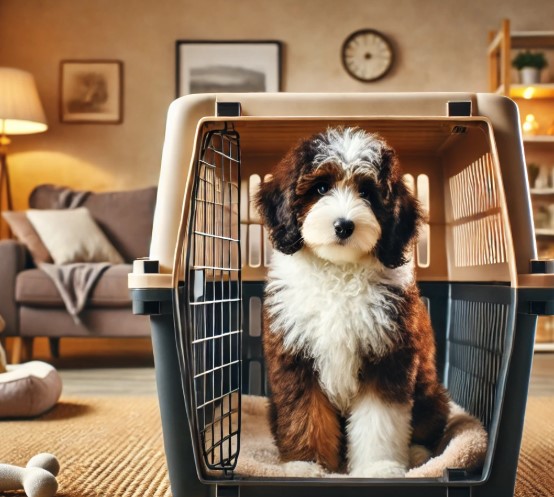
These crates are made of metal that provides excellent ventilation and visibility which helps the dogs to see their surroundings.
- Plastic Crates:
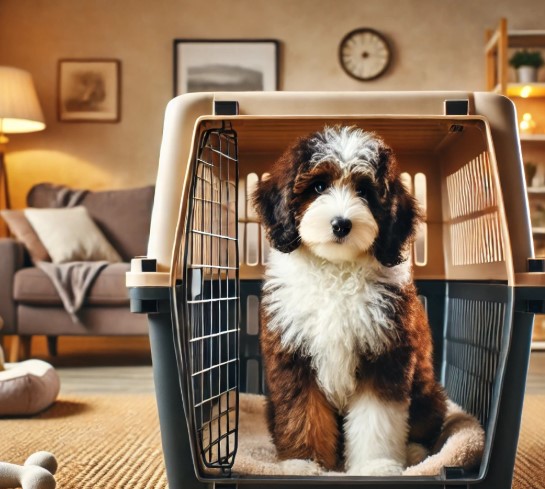
Plastic crates are portable and durable containers designed that are used for development, and transportation and provide a safe spot for the canine. It has some key features including size, durability, portability, and comfort.
- Soft-sides crates:
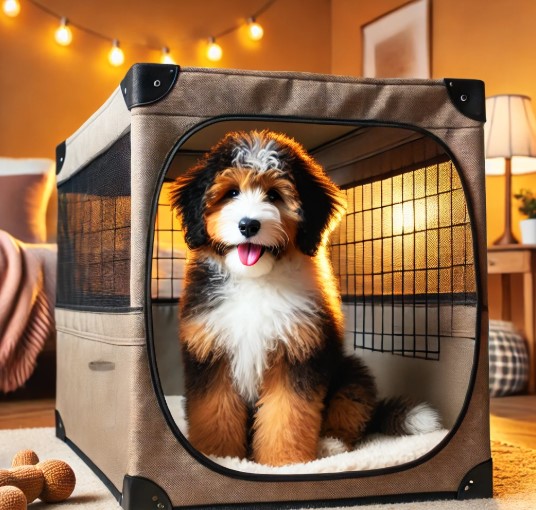
These are designed for miniature puppy comfortable and convenient with the following key features: material, lightweight, and easy to set up
House Training
Taking a puppy into the home is like having a roommate but if the pet is not properly trained then it can cause a source of trouble. Consistency, patience, and positive behavior are key to successful potty training.
Potty Training
Make a regular schedule for a pet so that he can play in time, and eat in time. A puppy can handle the bladder for one hour every month and if your page age is 1-2 months then hardly it can control for two hours.
One of the most challenging aspects of educating the puppy is teaching them to go potty at the right spot. Take the pet outside after finishing eating, and drinking.
Socializing
If you want your pet not to show unpleasant behavior when someone comes around. Start socializing your pet as soon as possible. Socialize the pet in such a way that they behave friendly with humans as well as other dogs.
Take the dog to dog parks to engage with other dogs so that your puppy meets and interacts with other dogs and behaves nicely.
Barking Training
Another issue that you need to tackle is barking. A puppy barks for some reasons such as when they see a stranger, seek your attention, for food, and go outside for a walk. Understanding the reasons behind their barking will help you to find out the solutions.
For example when your puppy is barking for food, then make sure your food is ready to serve them at the right time.
Outdoor Walks – Leash Training
Outdoor walk is an important aspect of educating the pet on how to do outdoor walks. A well-educated puppy on leash training can make the walk safe for both the pet and its owner. Following are the preparation tips for outdoor walk.
- Choose the Right Equipment
Selecting the right equipment is important for the leashing training and to make the dog comfortable and controlled during outdoor walks.
- Basic Commands:
Train the basic commands during outdoor walks such as “Hi“,” Sit”, and” Hello” that make him comfortable during outdoor walks.
- Consistency and Patience:
Consistency and patience are key to success in leash training. Every dog learns own at its speed.
Verbal Cues
Every dog understands a few human words, so you may also guide your puppy with human words. So that they perform actions whenever they listen to specific words.
For example in potty training, teach the word like “potty” and reward them after meeting your expectations. You may also teach with other words like eat, drink, and go outside.
Discourage Nipping
Nipping is a common habit in all dogs. If you want your puppy not bite to other dogs or humans it is essential to stop this habit in the early stage of pet life. Here are some following tips that can help[ to prevent this behavior.
- Redirect Attention:
Whenever you note that your pet is biting, redirect its attention toward toys or chew items.
- Use Positive Reinforcement:
Reward your puppy whenever they play with other dogs without nipping.
- Yelp or Make a Noise:
Whenever your dog nips you then cry in high sound, say “Ouch”.This will give him the signal that his bit is so hard. - Be Consistent:
Be consistent and use the same instructions so that they can know their behavior is not acceptable
- Provide Enough Exercise:
Ensure that your pet is getting enough physical exercise each day. A tired puppy can show strange and rude behavior compared to a highly energetic pet.
Final Words
Mini bernedoodle is a friendly, loyal, playful puppy whose remarkable love is irreplaceable and will never end. These training tips such as crate,house,barking,outdoor-leash,verbal cues,and socializing training help make a Mini Bernedoodle well behaved and friendly dog.Training your pet requires patience, consistency, and positive reinforcement.
FAQS
How to train a mini bernedoodle?
If a dog is trained in the early stage of life, it cannot create difficulties for its owner. So train your mini bernedoodle as soon as possible in the early days of life. You can educate your pet by following training tips such as Crate, barking, outdoor walks-leash,pott, and house training training,discouraging nipping,socializing, and verbal cues,
Are Mini Bernedoodles Easy to Train?
Yes, small bernedoodles are easy to train in, depending on various factors such as temperament, consistency, and socializing.Here is the breakdown of training elements
- Intelligent
- Smart
- Positive Reinforcement
- Eager to Pleasant